The Hinge-and-Hold Myth
Final Boss Golf recalibrates players away from hinge-and-hold in The Short Game. The reason is mechanical: hinge-and-hold forces muscular “holding” that drives the wedge toward a digging geometry and shrinks margin for error on tight lies.
The Friction Trap (Why Holding Fails)
Hinge-and-hold creates excessive forward shaft lean at impact. That shifts wedge behavior away from bounce-assisted gliding and toward leading-edge digging.
- Neutralizing the skid plate: The setup and delivery no longer expose bounce as the first contact layer.
- Muscular override: Heavy forearm tension degrades fine distance control and increases variability in low-point targeting.
When a delivery is rigidly held and the low-point shifts even slightly behind the ball, the leading edge contacts turf first. Turf friction then decelerates the clubhead and the wedge digs, producing heavy chunks and inconsistent spin.
The Passive Release: Execution Protocol
Tournament touch is not built on muscular tension. Instead of dragging the handle and holding rigid angles through the impact zone, you must deploy a release-driven model. By executing a passive release, you allow the bounce layer to interact with the ground first, preserving kinetic energy and clipping the ball cleanly.
Follow this exact step-by-step calibration sequence to disable the hold and let the clubhead run.
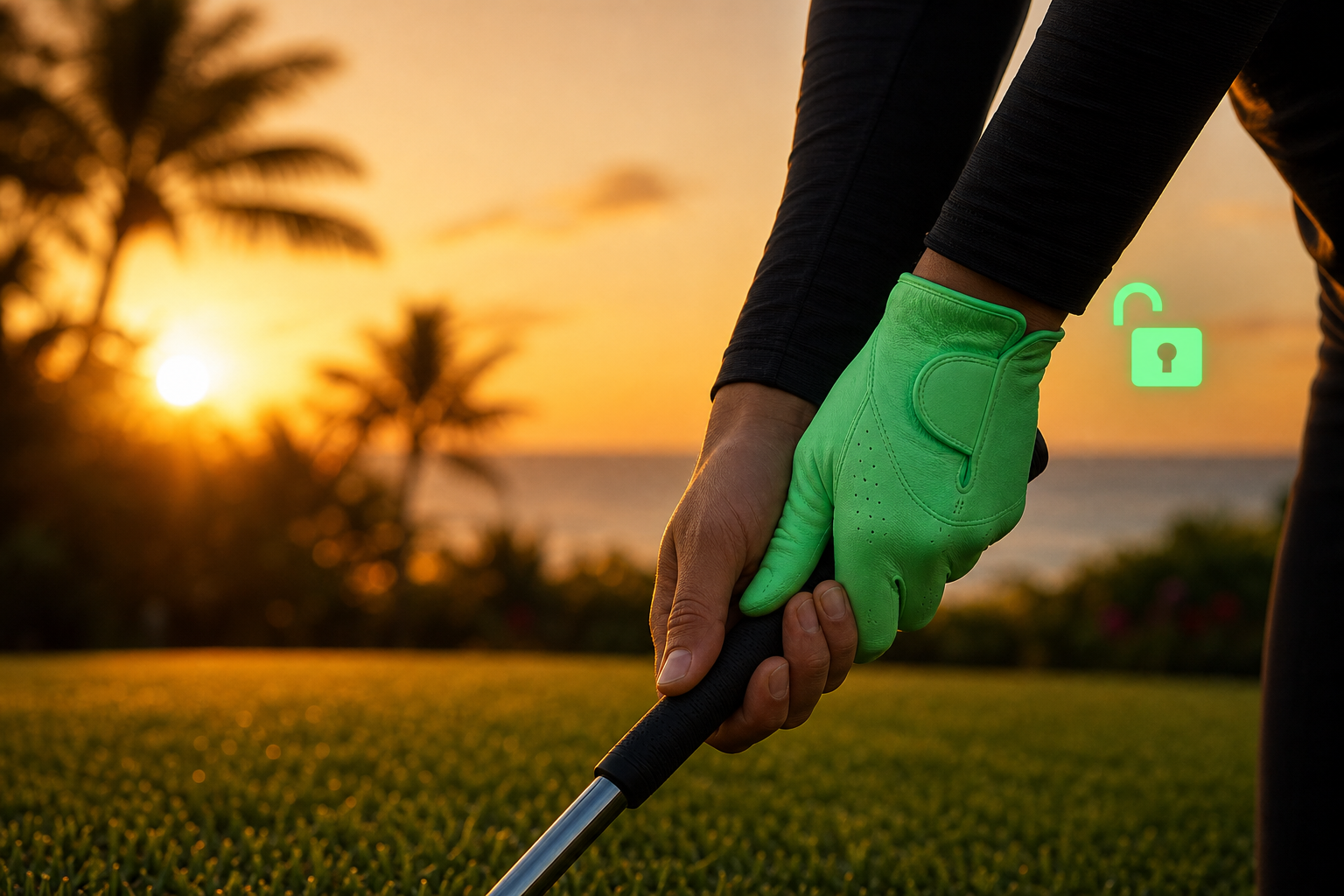
Step 1: Disabling Forearm Leverage
You cannot execute a passive release with white knuckles. Hinge-and-hold survives on tension; elite touch survives on gravity.
- The Mechanic: Lighten your grip pressure significantly, specifically in the lower (trail) hand. Remove all structural tension from your forearms.
- The Output: The clubhead is no longer locked into a rigid angle. It gains the physical freedom to drop and swing under its own weight.
Step 2: The U-Shaped Delivery
You are not trying to trap the ball against the earth like a 7-iron.
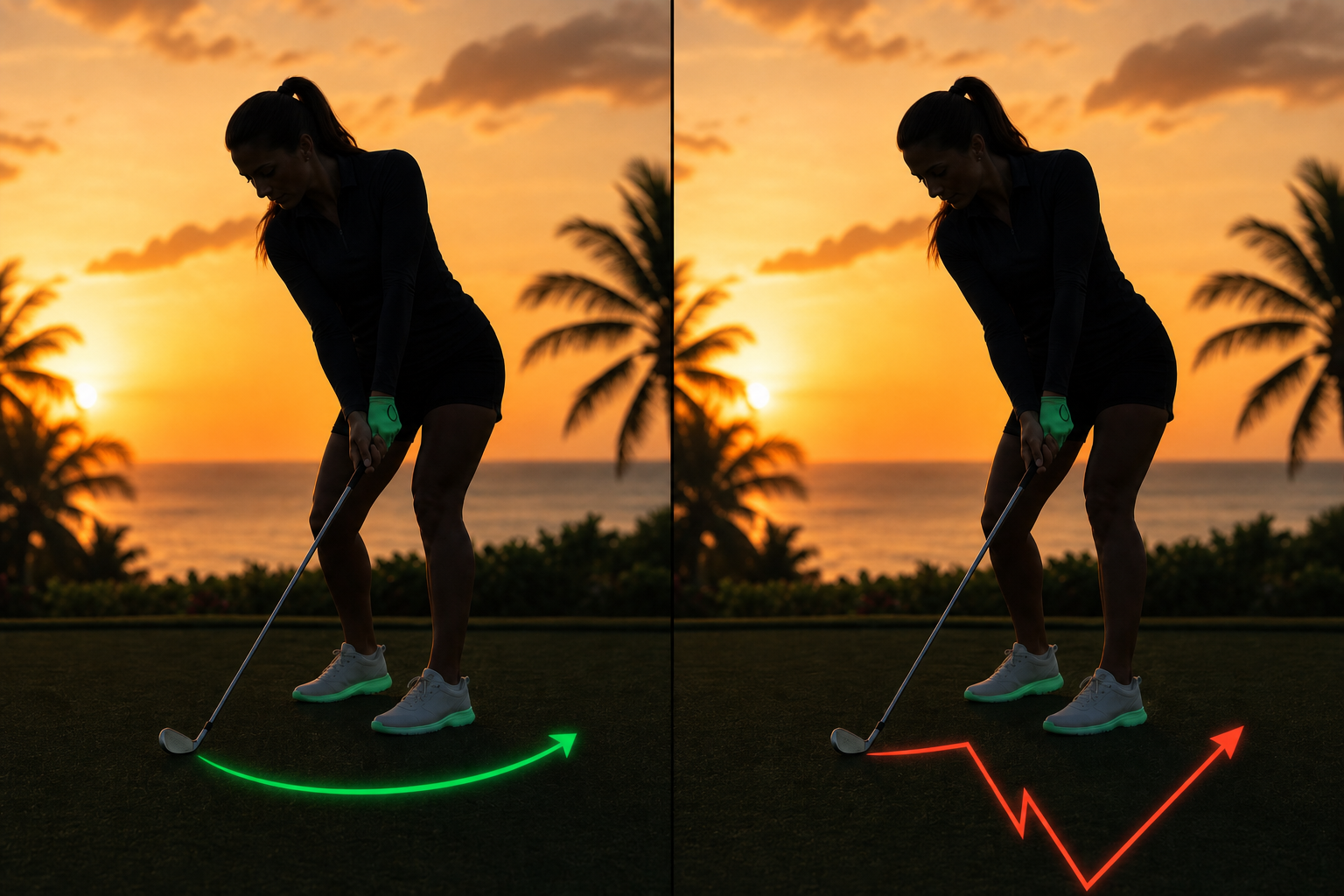
- The Mechanic: Dictate a shallow, sweeping “U” trajectory into the turf, completely abandoning the steep, chopping “V” motion.
- The Output: The club enters the delivery zone on a flat plane. The wedge is positioned to glide, not dig.
Step 3: Passive Clubhead Delivery
This is the exact opposite of holding the lag. You must surrender the clubhead.
- The Mechanic: As your torso pivots toward the target, allow the clubhead to free-fall and physically bypass your hands through impact.
- The Output: At contact, the shaft returns toward a neutral, vertical alignment rather than leaning aggressively forward. This perfectly exposes the skid plate (bounce) to the turf.
If you panic near impact and drag your hands heavily forward to secure the strike, you instantly deloft the wedge and drive the sharp leading edge directly into the dirt. Trust the free-fall.

Step 4: The Rotational Pivot Finish
A passive release does not mean your body stops moving. The hands go quiet, but the core engine keeps running.
- The Mechanic: Keep your chest rotating continuously toward your target as the clubhead slides under the ball.
- The Output: The rotation of your torso carries the momentum of the strike, preventing the club from snagging in the grass and ensuring the distance is controlled by your pivot, not a last-second wrist flick.

Grooving This Pattern
Grooving this pattern
The Hinge-and-Hold Myth
Primary drill
Delivery rule
passive release — clubhead passes the hands with neutral shaft at impact, not a rigid hold.
Work through the three steps below in order—don't skip ahead.
If you get stuck
The Geometry of Bounce calibration (leading edge digs instead of skims)
1. Learn It
~10% of your max · no ball
Trail-hand-only chip motions — see Trail-Hand Chip Protocol; small U-shaped swings that let the clubhead free-fall through the delivery window
passive release — clubhead passes the hands with neutral shaft at impact, not a rigid hold. — map geometry at checkpoints; no rush. After each rep: Shaft returns toward neutral at impact; no forearm tension or forward-lean hold
2. Prove It
~30–70% of your max · ball on
add a ball; trail-hand-only or split awareness — reduce lead-hand leverage; see Trail-Hand Chip Protocol. Ball flight does not matter.
Passive clubhead delivery and bounce-first contact — not distance obsession
Return to The Geometry of Bounce calibration if the leading edge digs instead of skims
3. Play It
Up to 100% of your max · game speed
game speed, new target/club/lie (or distance and break on putting), and the full Pre-Shot Loop when ready.
letting the clubhead pass through—not a body-part checklist
After a held, digging strike, reset with trail-hand-only reps before the next ball
If release still feels volatile at Play It, drop to Learn It trail-hand reps. Passive delivery maps faster when the lead hand cannot override with a rigid hold.
The Cheatcode for your Game