Lag Putting & Leave Zones
Speed Programming teaches how to calibrate distance. Lag Putting & Leave Zones teaches how to use that calibration on 25–50 foot putts—where the goal is not holing out, but guaranteeing a stress-free second putt.
On long putts, the winning equation shifts: Start Line + Leave Zone = Two-Putt. Hole speed is a bonus; a tap-in second putt is the score.
Trying to trickle a 40-footer into the cup invites three-putts. Short putts that die early break more, miss the capture zone, and leave 6-foot comebacks uphill. Lag putting is aggressive enough to reach the hole—not timid enough to die 4 feet short. Blow-past and die-short patterns: Faults by Swing Category — Putting.
The Leave Zone (The 3-Foot Ring)
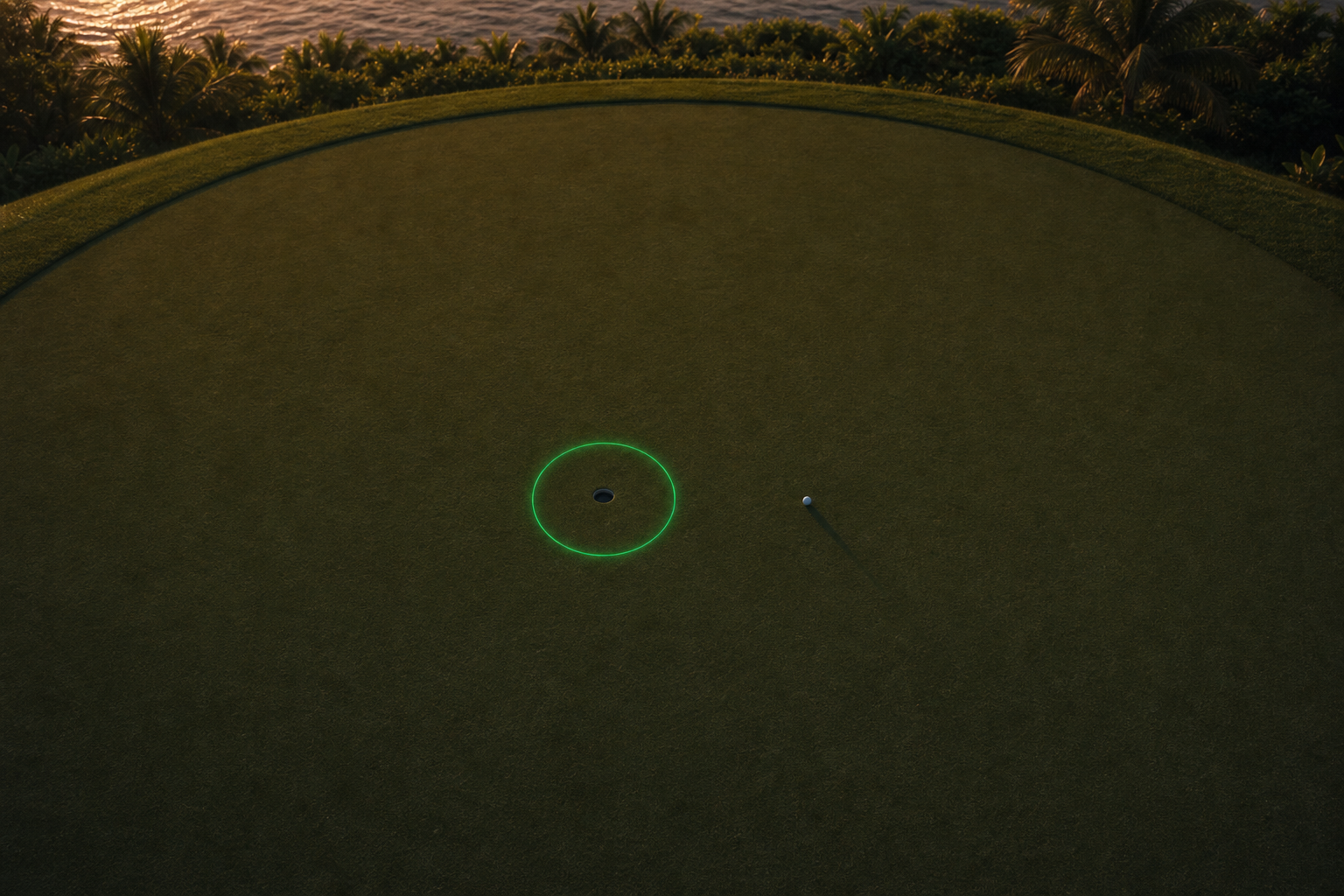
Final Boss Golf defines the leave zone as a 3-foot radius around the hole. Any first putt that finishes inside this ring is a statistical two-putt from tour data—and a psychological tap-in under pressure.
- Target speed at the hole: ball rolling 12–18 inches past on flat putts (matches Speed Programming baseline)
- Miss tolerance: high-side misses still have a chance; low-side misses never do—commit to Green Reading Algorithms before speed
- Second-putt planning: if the leave misses, the comeback should be inside 3 feet and uphill when possible
Step 1: Pace the Putt (Distance Before Level)
Long putts fail when players guess speed from the flag. Final Boss Golf paces distance first, then selects a Core System Level.
- The Mechanic: Walk or stride-count from ball to hole. Map the distance to your calibrated Level 1–3 matrix from the morning practice-green session.
- The Output: A programmed stroke length before address—no mid-stroke speed calculation.
Standing over a 35-footer staring at the hole invites impact manipulation. Pace the distance behind the ball, lock the Level, then execute the Planar Pendulum — lag routine in Pre-Shot by Swing Category.
Step 2: Uphill vs. Downhill Lag
The leave zone target shifts with slope:
| Slope | Speed strategy | Leave target |
|---|---|---|
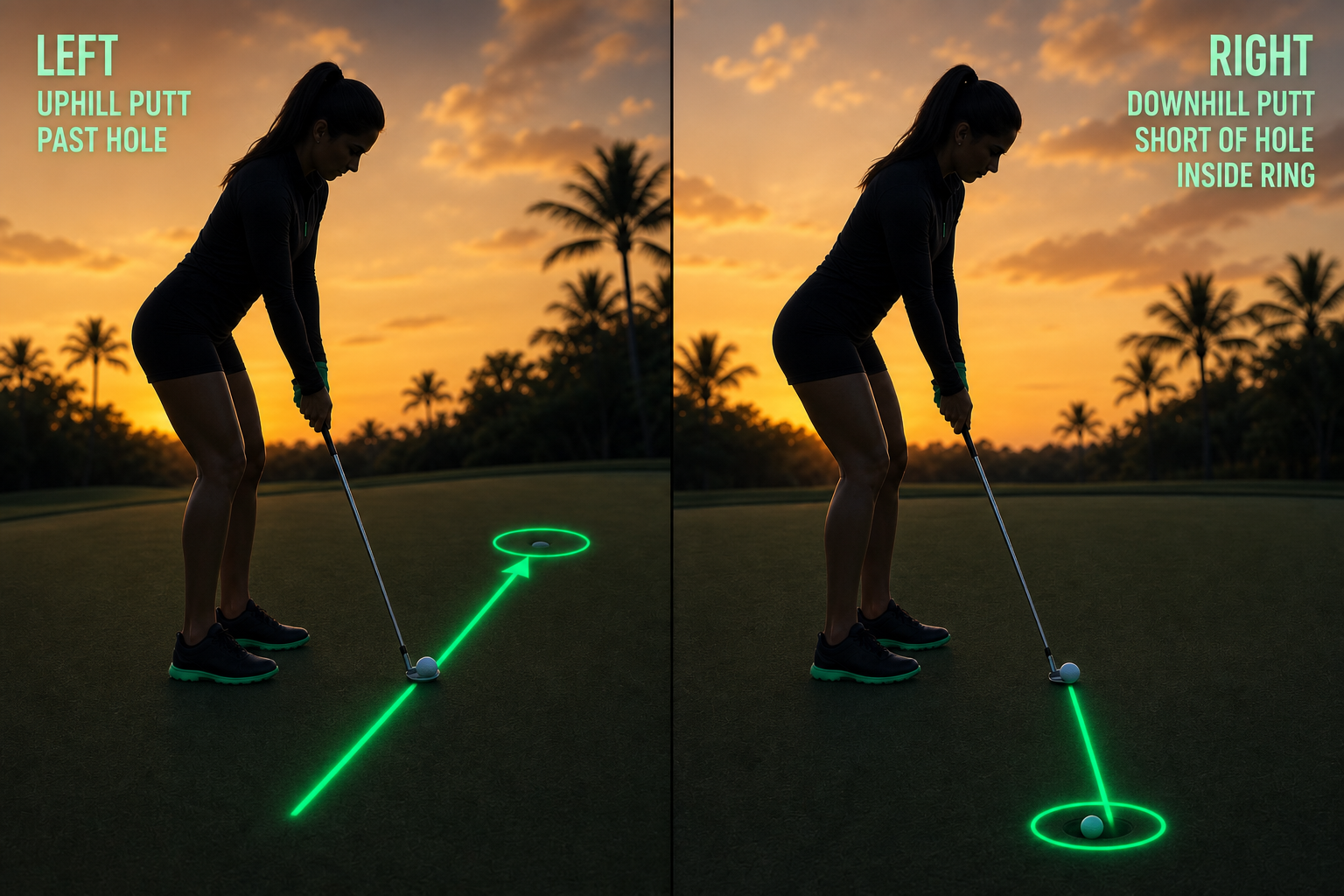
| Uphill | More aggressive—gravity kills speed | 18–24 inches past; err long |
| Flat | Baseline Speed Programming | 12–18 inches past |
| Downhill | Conservative—gravity accelerates | Die it into the front edge of the leave zone; 6–12 inches past max |
Blasting a downhill 30-footer "to the hole" turns the green into a runway. The leave zone becomes irrelevant when the ball races 8 feet past. On downhill lag, subtract a half-Level or use a shorter stroke than flat distance suggests.
Step 3: Break Interaction on Long Putts
On breaking lag putts, speed and read are coupled—a faster roll breaks less; a dying putt breaks more.
- The Mechanic: Use Green Reading Algorithms for aim, then add speed so the ball maintains enough momentum to hold the high side through the hole
- The Output: A putt that passes over the Target Coordinate with enough speed to finish in the leave zone—not a dying low-side miss
A long putt that misses high still has forward momentum toward the hole. A long putt that misses low is dead. When in doubt on lag speed, favor the high side with committed roll.
Step 4: Competitive Execution (Two-Putt First)
On course, declare the objective before stroking:
- Read break (Green Reading Algorithms)
- Pace distance and select Level (Speed Programming)
- Adjust for uphill/downhill leave target
- Execute with external focus on the leave zone, not the cup
If the ball finishes inside 3 feet, execution was correct—even on a miss.

Grooving This Pattern
Grooving this pattern
Lag Putting & Leave Zones
Delivery rule
finish inside the leave zone—holing out is a bonus.
Work through the three steps below in order—don't skip ahead.
1. Learn It
Constant metronome tempo · Levels 2–3 length · no make goal — Speed Programming
30–40 foot putts on flat green—pace distance, select Level, roll to leave zone only
finish inside the leave zone—holing out is a bonus. — map geometry at checkpoints; no rush. After each rep: Ball finishes 12–18 inches past; no decel or punch
2. Prove It
Same tempo · Levels 1–3 · ball on
Alternate uphill, flat, and downhill 25–45 foot putts—adjust leave target per slope table.
Alternate uphill, flat, and downhill 25–45 foot putts—adjust leave target per slope table (8 of 10 reps)
Face Angle vs. Path gate if start line misses corrupt leave distance
3. Play It
Same tempo · game speed
game speed, new target/club/lie (or distance and break on putting), and the full Pre-Shot Loop when ready.
Full read + pace + Level on every rep; score success by leave-zone finish, not makes—not a body-part checklist
After a 6+ foot comeback, re-pace and subtract Level before the next long putt
If lag putts consistently leave 5-footers, the fault is usually timid speed—not green reading. Add half a Level before changing aim.
The Cheatcode for your Game