Face Angle vs. Path
Final Boss Golf treats putting as a launch-direction problem with one dominant variable: face angle at impact. Path matters, but it is not the primary governor for the starting line.
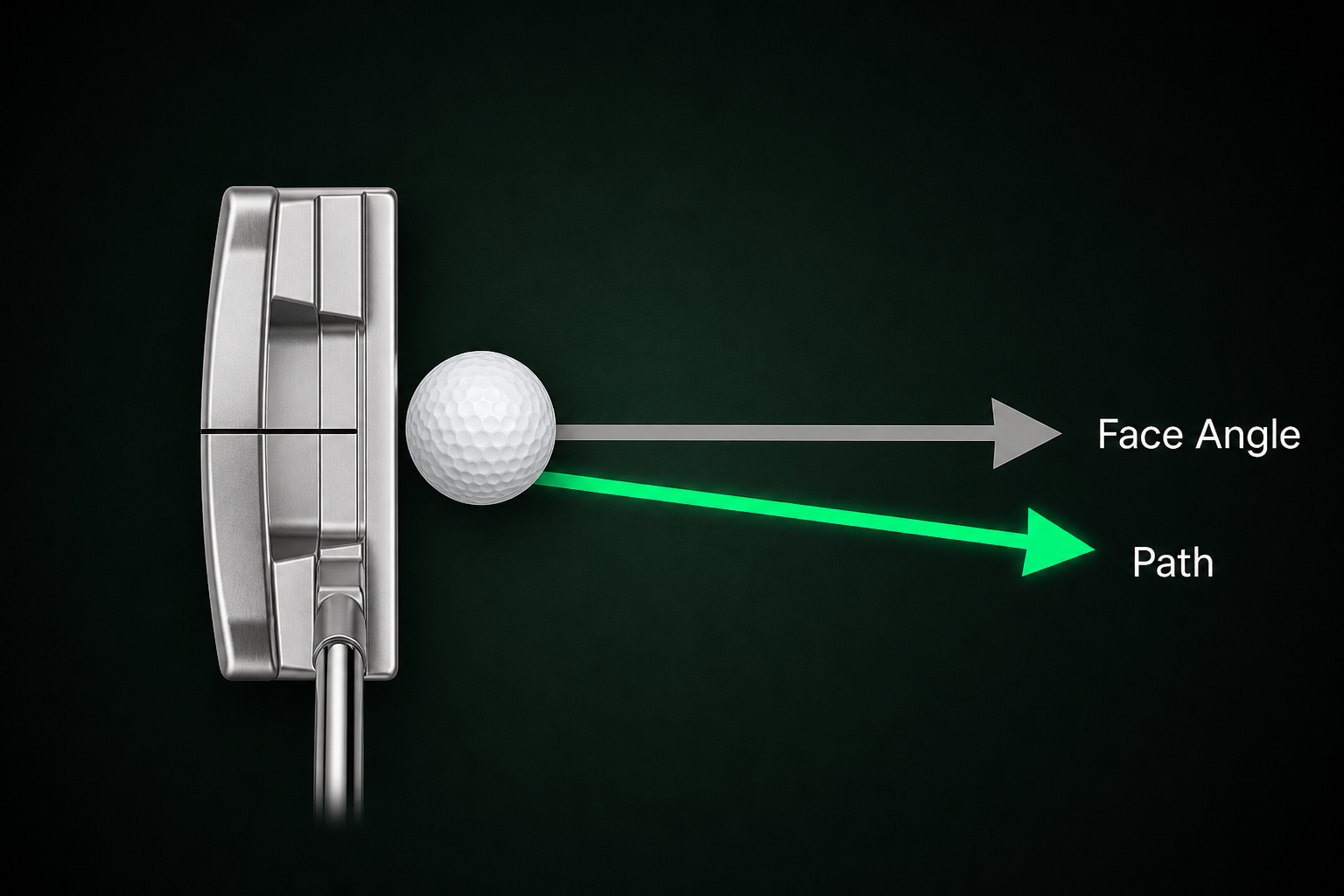
The 90/10 Ratio
Because a putter has near-zero loft and the collision speed is low, the physics ratio shifts:
- Face angle dictates roughly 90%–95% of the ball’s initial launch vector.
- Putter path contributes the remaining 5%–10%.
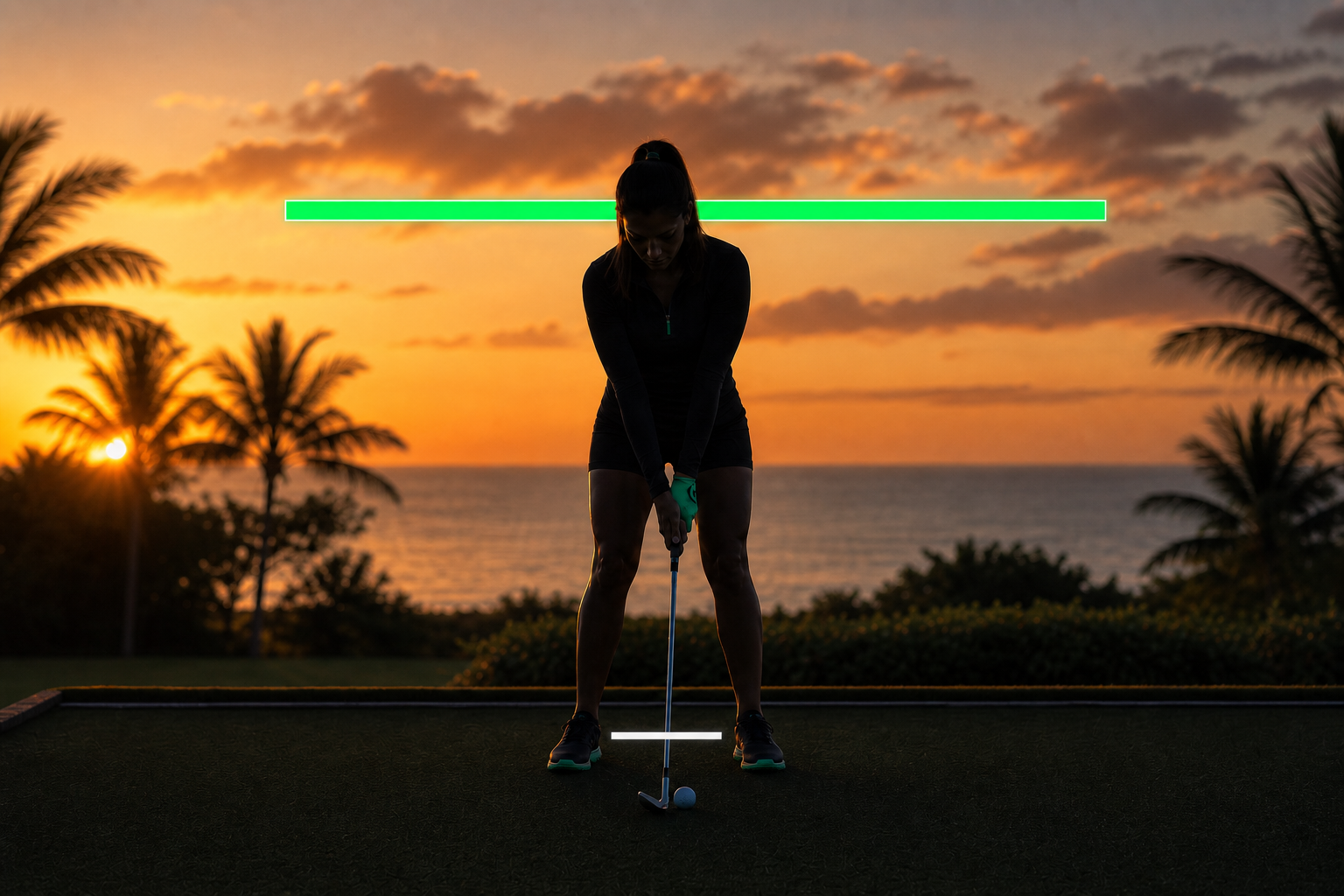
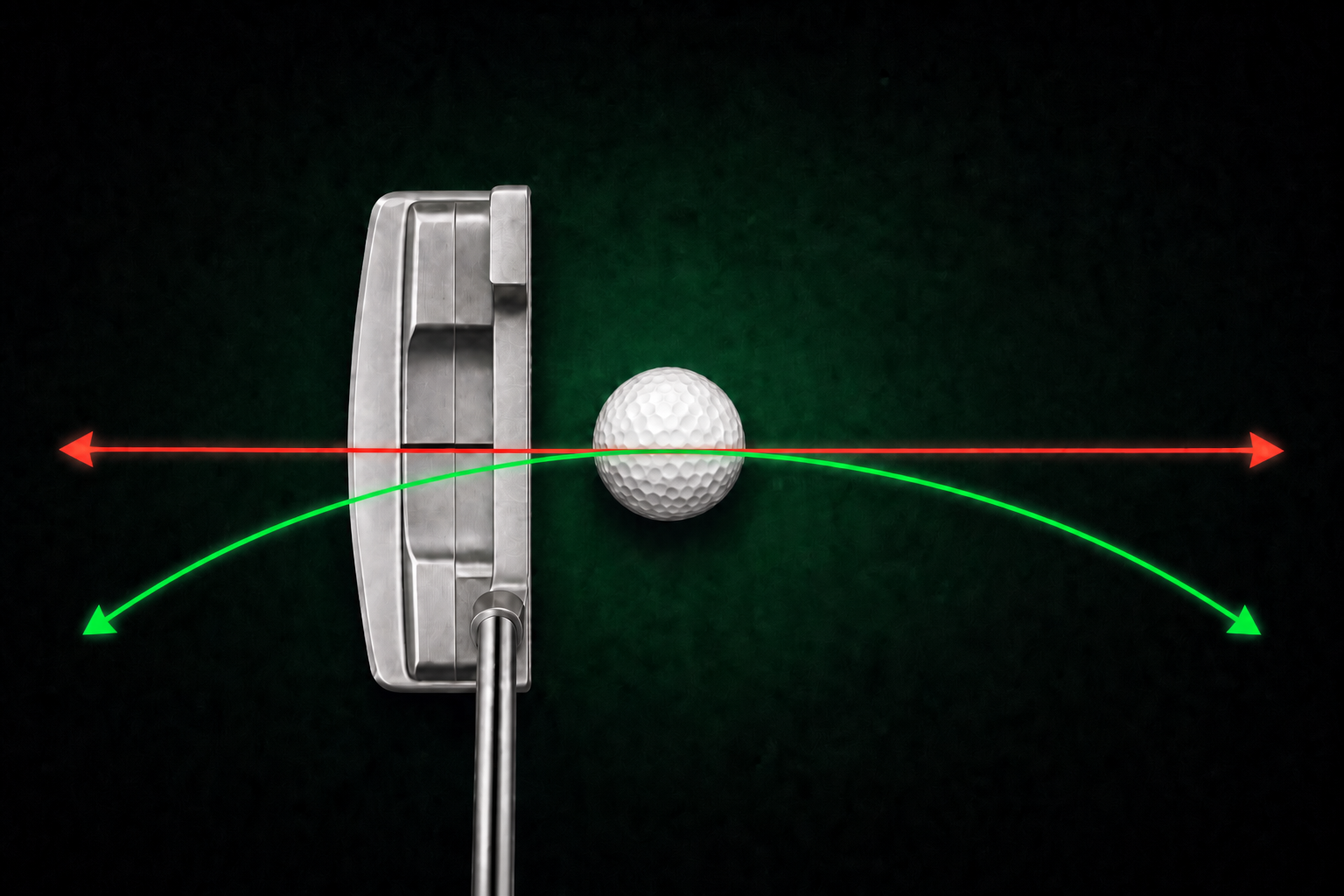
Obsessing over “straight back, straight through” is a trap. A perfect path with a face that is 1° open still misses. A slightly arcing path with a square face can hold up under pressure. Start line is a face problem first.
Start Line Calibration
Final Boss Golf does not chase “stroke shape.” The priority is calibrating the start line.
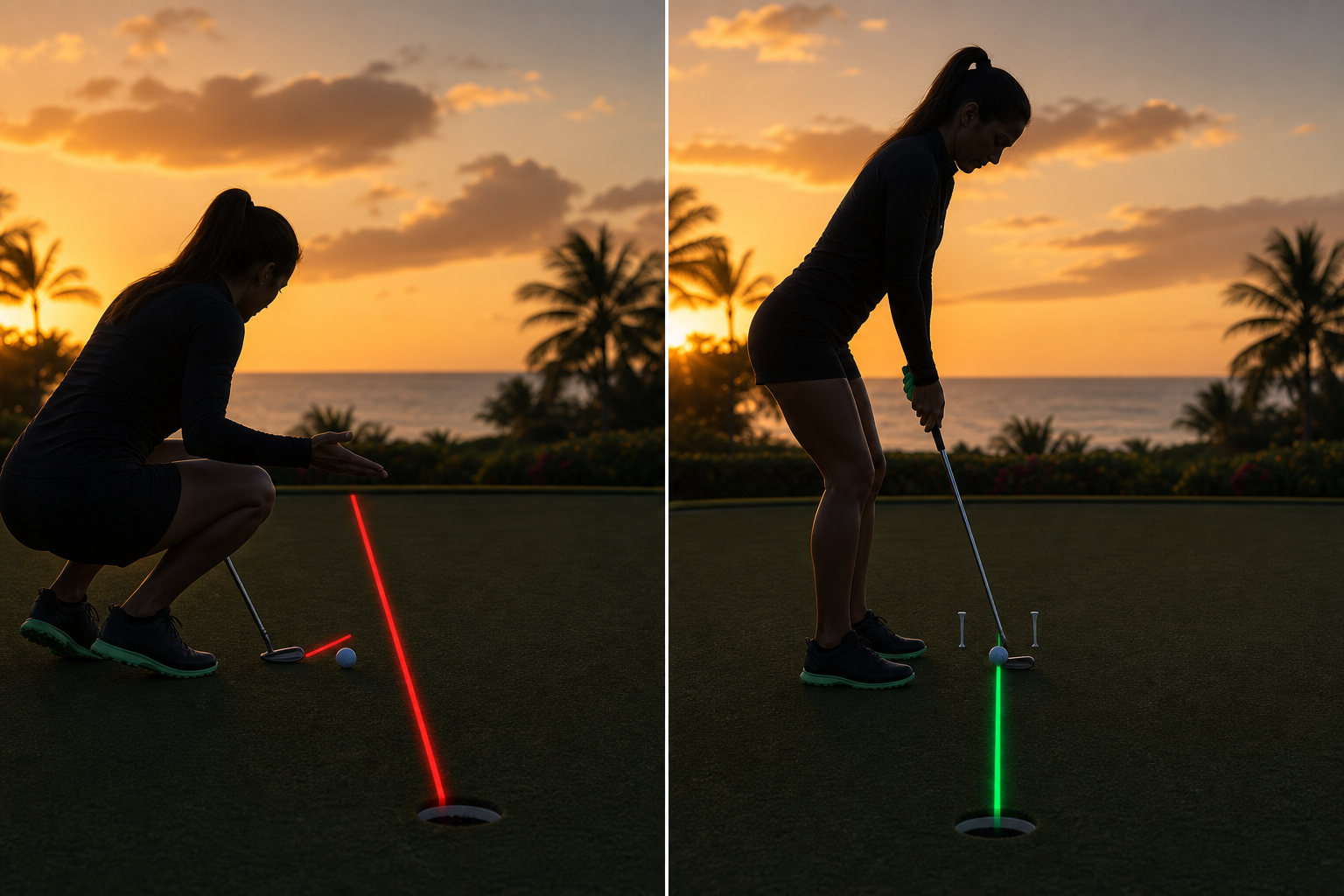
1) The Intermediate Target
Long-distance aiming degrades visual precision. Instead:
- pick a micro-target (a blade mark, discoloration) about 6 inches in front of the ball on the intended line
- objective is rolling the ball directly over that coordinate

2) Diagnostic: The Gate Constraint
Objective feedback beats guesswork:
- place two tees slightly wider than a ball, 12 inches in front of the ball on the start line
- roll putts through the gate
- misses indicate face-angle variance, not “break reading”

If the ball consistently exits left/right of the gate, fix the face delivery before changing the read. A calibrated start line simplifies green reading and makes speed training more reliable.
Relationship to the Pendulum
The Planar Pendulum reduces degrees of freedom so the face stays stable. Face-angle training then becomes a calibration problem, not a timing problem.
Grooving This Pattern
Grooving this pattern
Face Angle vs. Path
Primary drill
Start-Line Gate Protocol — Learn It maps with intermediate-target rolls; Phases 2–3 use the full gate
Delivery rule
square the face at impact — path is secondary to the 90/10 ratio.
Work through the three steps below in order—don't skip ahead.
If you get stuck
The Planar Pendulum (wrist or body motion corrupts the stroke)
1. Learn It
Constant tempo · short putt length · dry or slow stroke — 10% Speed Protocol
Intermediate-target rolls — pick a mark 6 inches ahead on the intended line; roll over it with pendulum strokes only
square the face at impact — path is secondary to the 90/10 ratio. — map geometry at checkpoints; no rush. After each rep: Face stays square through impact; no path correction mid-stroke
2. Prove It
Same tempo · Levels 1–3 · ball on
add a ball on the practice green; tee gate 12 inches ahead — see Start-Line Gate Protocol; ball must exit through the gate on the start line. Ball flight does not matter.
Gate clearance and face stability — not make-rate obsession
The Planar Pendulum calibration if wrist or body motion corrupts the stroke
3. Play It
Same tempo · game speed
game speed, new target/club/lie (or distance and break on putting), and the full Pre-Shot Loop when ready.
gate or intermediate target—not a body-part checklist
After a consistent left/right miss, fix face delivery before adjusting read or path
If putts miss the gate laterally at Play It, the pendulum or face angle is the fault — not green reading. Recalibrate face first.
Read next: Start-Line Gate Protocol · Short Putts & the Make Zone · Faults by Swing Category — Putting
The Cheatcode for your Game