The Pre-Shot Loop: Execution Sequence
Range reps do not automatically transfer to the course. Hazards, consequences, and time pressure push the nervous system back toward old, myelinated movement faults.
The Pre-Shot Loop is a fixed three-phase routine that protects Final Boss Method geometry under pressure. It is the transfer bridge in Transfer Protocol—Phase 3 random reps and on-course shots must use the same loop as block practice, or range patterns and course patterns become different skills.
The sequence below is the Full Swing default. Short Game and Putting compress or replace Phase 1 — see Pre-Shot by Swing Category. Compressed short-putt and lag-putt variants live there too.
Movement Fault: Static Freeze Over the Ball
Many players plant the stance and freeze for ten seconds while cycling internal thoughts.
- Tension leak: static posture breeds muscular tension and kills parametric acceleration
- Cognitive overload: stillness gives doubt time to enter the sequence
The ball is not the target—it sits in the path to the target. Staring at the ball too long primes a chop-down impulse instead of rotation through 3D space.
Phase 1: Calibration (Behind the Ball)
In the "safe zone" behind the ball, looking down the line:
- execute one slow calibration swing (~20% speed)
- feel shallowing onto the Elbow Plane, lead-side pressure, J-Curve handle path
- step back and visualize the intended flight
Do not burn focus on full-speed practice swings before the real shot.

Phase 2: External Focus Lock-In
Walking into address, internal cue-checking shuts off.
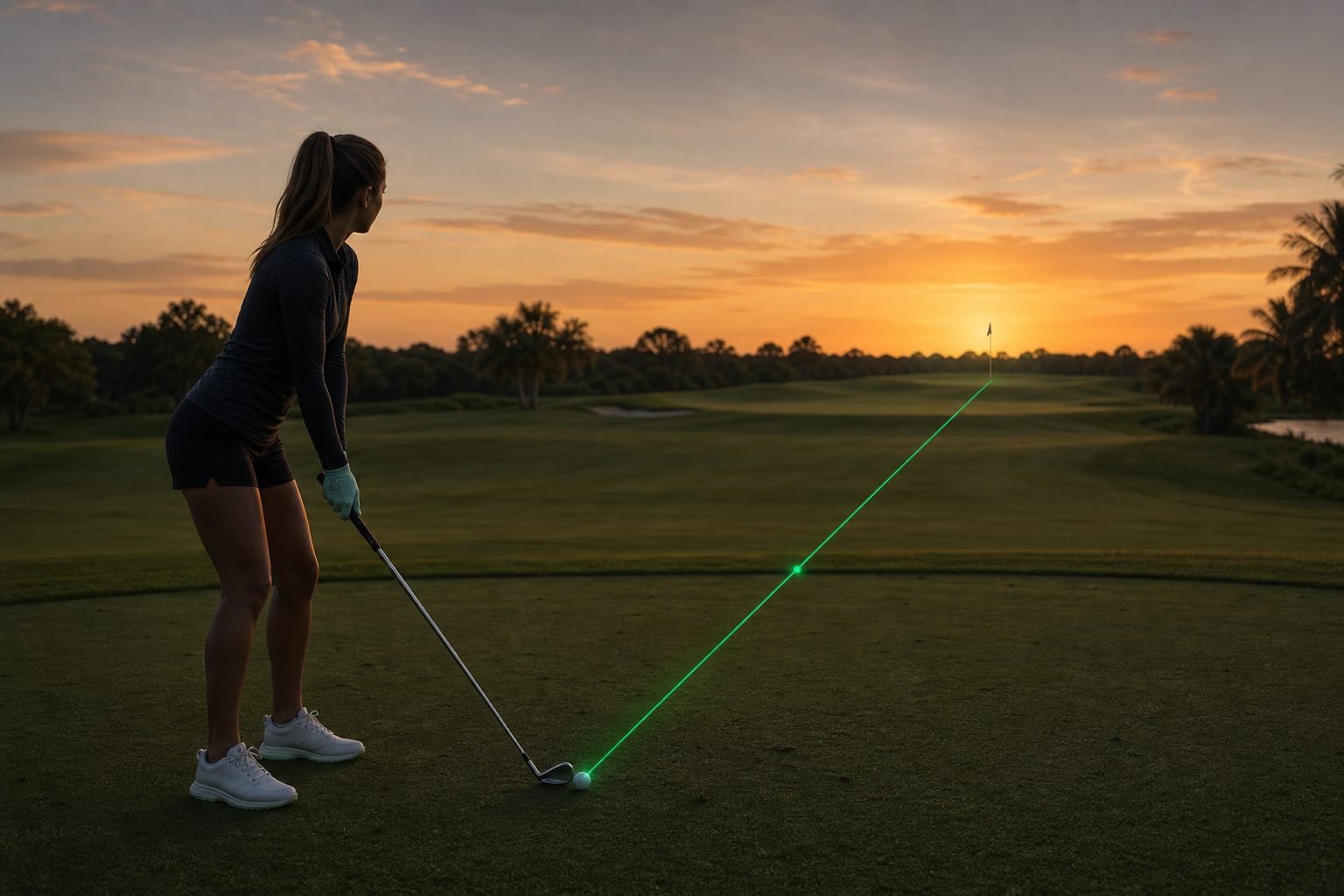
- pick an intermediate target ~2 feet in front of the ball on the start line
- square the leading edge to that mark, then build stance around the face
- primary objective becomes: roll the ball over that coordinate
Phase 3: Dynamic Execution
Over the ball:
- maintain micro-motion (waggle, foot pressure, soft grip)
- one look at the ultimate target, eyes snap to ball, takeaway starts immediately
- trust GRF and the trained geometry—do not manually steer the club

Timing Template
Elite players repeat the same loop rhythm (often 8–12 seconds from walk-in to takeaway). Predictability reduces latency.
| Phase | Typical duration | What happens |
|---|---|---|
| Calibration | ~3 s | One slow swing or programming step behind ball |
| Lock-in | ~4 s | Walk in; intermediate target; square face; build stance |
| Execute | ~2 s | Micro-motion; one look; takeaway |
Measure with a stopwatch during Transfer Protocol Phase 3 until the rhythm is automatic.
Grooving This Pattern
Install the loop before tournament load — a 7-day schedule, not 50 swing reps:
Days 1–2: Map Timing
- Where: Range, no ball or teed ball at ~10% of your max (10% Speed Protocol)
- Objective: Full three phases; stopwatch confirms 8–12 s rhythm
- Check: No full-speed practice swings before the real rep
Days 3–4: Random Range
- Where: Transfer Protocol Phase 3 — new target/club every rep
- Objective: Same loop timing on every random rep
- Rule: If loop is skipped, rep does not count toward exit criteria
Days 5–7: Course Transfer
- Where: On-course or pressure simulation (Course Management)
- Objective: Full loop every shot; after one mishit, run Recovery & Reset
- Success: First tee feels like range Phase 3 — not a new context
If Phase 3 random reps feel easy but the first tee feels foreign, the routine was skipped on the range. Add the full Pre-Shot Loop to Phase 3 before declaring random-mode success.
Read next: Pre-Shot by Swing Category · Recovery & Reset Protocol
The Cheatcode for your Game